Calm. Clarity. Connection. Intention.
Annie Ranger
RYT,RMT

Welcome to The Bonus Section!
I Am So Happy You Found
Mindful Owl Adventures-
A Magical Journey to Feel Calm, Focused, and Empowered
Bonus Section !
⭐️Note: For more instruction on breathing cues, be sure to check the ⭐️ Special Note box below for a helpful tip on how to guide the breath throughout the practices.

Hi, I’m Annie— And, I’m so glad you’re here.
Your QR code has brought you to the Calm Corner—a special part of our journey together.
Here, you’ll find extra activities and playful tools to help you calm your body, focus your mind, and reconnect with the superpowers already inside you.
Take a breath, explore, see what works for you, and enjoy the magic.
Welcome to The Calm Corner
More Mindfulness - Insights, Tips, Tools, and Actvities
This section is here to help you make mindfulness a natural part of your daily routine. With regular practice, these simple tools can become powerful habits—unlocking a magical path to your own inner superpowers
These insights tips, tools, lessons and activities are here to make it fun and easy to incorporate mindfulness into your daily routine, helping you and your child tap into the power of calm, clarity, and awareness of the present moment.
Enjoy the journey—as it opens the door to a magical path where you’ll discover that your superpowers are already within you.

Special Note to Readers, Parents, Teachers & Caregivers
You may notice that in Mindful Owl Adventures, I sometimes say “inhale" or "breathe in through your nose” or “exhale" or "breathe out through your mouth” in different spots. While the book gently explores breath in a variety of ways, one simple and effective pattern to support calm is this:
Inhale through your nose, drawing the air all the way down to your belly…
Exhale gently through your mouth.
This rhythm supports emotional regulation and helps the nervous system shift into rest and balance.
You can use this breath with any of the practices in the book—or simply whenever you or a child need a mindful moment.
More Mindful Owl Breathing Techniques
Breath is a superpower! It’s the fastest way to calm the mind, energize the body, and build confidence, resilience, and joy. Different types of breathing techniques help our bodies in different ways.
You and your child can practice these breathing tools to regulate emotions, reduce stress, and build resilience. By tapping into the power of breath, kids can transform how they feel, think, and respond to life’s challenges—all while becoming more confident, resilient, and joyful.

Deep Belly Breathing to Focus and Calm Your Mind and Body
Take deep belly breaths in through your nose, filling your belly with air so it rises like a big balloon. Hold your breath. Slowly breathe out through your mouth like you are blowing out candles.
-
Breathe in through your nose, for a count of 4.
-
Hold for a count of 4.
-
Slowly and completely, breathe out of your mouth to the count of 4.
-
Hold for a count of 2.
-
Repeat 3 times. Breathe in to a count of 4, hold for a count of 4, slowly breathe out to a count of 4.
For extra calm breathe out to the count of 6! Slower exhales calm our bodies.
4 7 8 Breathing
This type of breathing helps place the body into a deep state of relaxation.
1. Take a deep breath in, then exhale through your mouth with a whoosh
sound.
2. Close the mouth and inhale quietly through your nose to a mental count
of four.
3. Hold for a count of seven.
4. Exhale completely through your mouth, with a whoosh, to the count of
eight.
5. Repeat this cycle for at least four breaths.
Square Breathing
-
Start at the bottom right of the square.
-
Breathe in for four counts as you trace the first side of the square.
-
Hold your breath for four counts as you trace the second side of the square.
-
Breathe out for four counts as you trace the third side of the square.
-
Hold your breath for four counts as you trace the final side of the square.
-
You just completed one deep breath!
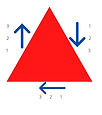
Triangle Breathing
-
Start at the bottom left of the triangle.
-
Breathe in for three counts as you trace the first side of the triangle.
-
Hold your breath for three counts as you trace the second side of the triangle.
-
Breathe out for three counts as you trace the final side of the triangle.
-
You have just completed one deep breath!
Flower Breath



Breathing Lesson with Audio and Video
Mindful Owl Recorded Meditations
Help your child reset their mind and body,
and tap into a sense of calm and clarity to thrive.

Meditation has been practiced for thousands of years, and it’s something both parents and kids can do together. It’s simple, free, and doesn’t require any special equipment—just a few moments of focus and breathing. Meditation helps create a sense of calm, bringing relaxation to both the mind and body that stay with you throughout your day.
Short Love Meditation
Short Gratitude Meditation
Body Scan Meditation
More Mindful Owl Conversation Starters
More Mindful Owl meaningful conversation starters to help you and your child navigate tough topics with ease. Remember—name it to tame it!
Simply naming an emotion can bring comfort and understanding.


More Mindful and Meaningful Conversations
Throughout Mindful Owl Adventures the kids and animals are busy learning lessons that teach them valuable skills. Through using scenes, characters and lessons from the story, the following questions help to make having mindful conversations easy. These meaningful conversation starters are here to help you and your child navigate tough topics with ease. Remember—name it to tame it! Simply naming an emotion can bring comfort and understanding.
Questions to Start Mindful Discussions:
1. How do the kids and animals calm themselves? How do you calm yourself?
2. Where in the book do the animals or the kids use their eyes and ears to keep them aware and safe? How can you use your eyes and ears to stay aware and safe?
3. Who do the kids and animals go to when they need help? Who do you go to when you need help?
4. What does Speedy Bunny do when she feels fear? What does Shy Turtle do when he feels fear? What do you do when you feel fear?
5. Who could have used mindful speaking instead of his actions in order to play with the animals? How can mindful speaking help you?
6. How does Rascal Raccoon feel about his “mask”?
Does the way he looks determine how he acts?
Can looks be misunderstood?
7. What can happen when Prickly Porcupine gets excited? What happens when you get excited?
8. How do the kids and animals ultimately get along? How do you get along with others?
9. How does it make you feel when you tap into love? Who can you send love to?
10. How does it make you feel when you do the visualization and affirmation? Can you come up with your own affirmation?
Mindful Owl Activities
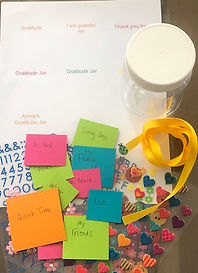
Step by Step Instructions to Make Calming Jar, Gratitude Jar and More Activities
Calming Jars remind us that even the most shaken emotions will settle with time. Gratitude Jars help us focus on what we’re thankful for, guiding us to be our best, healthiest selves. Find more fun ways to help your kids stay calm, focused, and resilient!
Calming Jar: A great reminder that even shaken emotions will eventually settle down

Gratitude Jar: Studies prove that feelings of gratitude can boost the immune system
Coloring Pages
Click on a picture to download a copy of the picture to color!


Click on the word search to download a copy to print!

Why Affirmations for Kids
Affirmations: A Powerful Tool for Parents and Kids
Affirmations are short, positive phrases that help kids build confidence, calm, and resilience. When repeated often, affirmations can rewire the brain for self-belief, emotional regulation, and kindness. They give children tools to face challenges
with courage and to feel safe, loved, and empowered.


Affirmations: A Powerful Tool for Parents and Kids
Affirmations are short, positive phrases that help kids build confidence, calm, and resilience. When repeated often, they can rewire the brain for self-belief, emotional regulation, and kindness. Affirmations give children tools to face challenges with courage and to feel safe, loved, and empowered.
Try practicing them with your kids before school or a big event. Place a hand on your heart, add a few mindful breaths, and let the words settle in—little moments that can make a big difference.
Below are some affirmations you can practice at home or in school—and don’t be afraid to make up your own as well!
Confidence & Self-Worth
-
I am brave.
-
I am strong inside and out.
-
I can do hard things.
-
My voice matters.
-
I believe in myself.
Calm & Inner Peace
-
I can find my calm.
-
I am safe and loved.
-
I can take a deep breath to feel better.
-
Peace begins with me.
-
My body knows how to relax.
Kindness & Connection
-
I am kind to myself and others.
-
I carry love in my heart.
-
I can be a good friend.
-
My smile and kindness make a difference.
-
Love helps me feel strong.
Focus & Learning
-
I can listen and learn.
-
I am curious and open to new ideas.
-
I can take my time and try again.
-
Mistakes help me grow.
-
I can do my best today.
Emotions & Resilience
-
All feelings are okay—I can handle them.
-
I can name my feelings and let them move through me.
-
I can choose calm when I feel upset.
-
I am bigger than my worries.
-
I can always start again.
Guided by My Heart and Inner Wisdom
-
I trust my inner voice—it helps me believe in myself.
-
My inner wisdom guides me to find calm.
-
My heart guides me to be kind and loving.
-
I trust my inner wisdom to guide my choices and learning.
-
I can listen to my inner voice to handle big feelings.
Why Mindfulness Matters

Mindfulness: A Powerful Tool for Parents and Kids
Read more about how these science-backed tools can help build resilience, ease anxiety, and cultivate a sense of calm—no matter what life throws your way.

Mindfulness: A Powerful Tool for Parents and Kids
Today, children, parents, and communities everywhere are facing unprecedented stress—personal loss, uncertainty, economic challenges, and learning disruptions. While we may not always have control over what happens around us, we do have the power to control how we respond. Practicing mindfulness helps us manage our thoughts, emotions, and reactions in a healthy way.
Mindfulness is the simple yet powerful practice of paying attention to the present moment with kindness and without judgment. Instead of being caught up in worries about the future or regrets from the past, mindfulness helps us focus on now. It’s like exercise for the brain—strengthening attention, emotional resilience, and overall well-being.
Why Mindfulness Matters
-
Research shows that our minds wander nearly 47% of the time—meaning we often miss out on what’s happening right now. Mindfulness helps bring our attention back to the present, improving focus and reducing stress.
-
We have thousands of thoughts a day, and most are automatic and negative. Mindfulness teaches us that we are not our thoughts—instead, we can observe them and choose how to respond.
-
Studies show that practicing mindfulness can change the structure of the brain (a process called neuroplasticity). The more we practice, the stronger our brain becomes in areas like focus, learning, patience, kindness, and emotional regulation.
Mindfulness in Action
Mindfulness isn’t about stopping thoughts; it’s about noticing them without getting carried away. By practicing kind awareness, we can help ourselves and our children build resilience, reduce anxiety, and develop a sense of calm—no matter what life throws our way.
The best part? Mindfulness is a skill that grows stronger with practice. Just like exercising a muscle, the more we train our brains to be present, the more natural it becomes.
By embracing mindfulness as a family, we create a space where everyone feels more grounded, connected, and able to navigate life’s challenges with greater ease. It’s a small shift that can make a big difference!
Benefits of mindfulness for children:
-
Strengthens immune functioning
-
Decreases cortisol
-
Children experience more awareness of their body, thoughts and emotions
-
Children are better able to stay more focused
-
Decreases stress, children can experience less stress and anxiety
-
Mindfulness can improve impulse control and interpersonal skills
-
Executive function can increase
-
Can improve memory
-
Can help make better decisions
-
Can help creativity
-
Can improve resilience and confidence
Please Note:
The content shared on this website—including books, workshops, wellness tools, blog posts, and practices related to mindfulness, meditation, yoga, and Reiki/energy healing—is intended for educational and inspirational purposes only. It is not a substitute for professional medical, psychological, or therapeutic advice, diagnosis, or treatment.
Mindfulness, meditation, yoga, and Reiki/energy healing are supportive practices meant to enhance well-being and self-awareness. Always consult a qualified physician or healthcare provider with any questions you may have regarding a medical condition or treatment, and never disregard professional medical advice or delay seeking it because of something you’ve read on this website.